
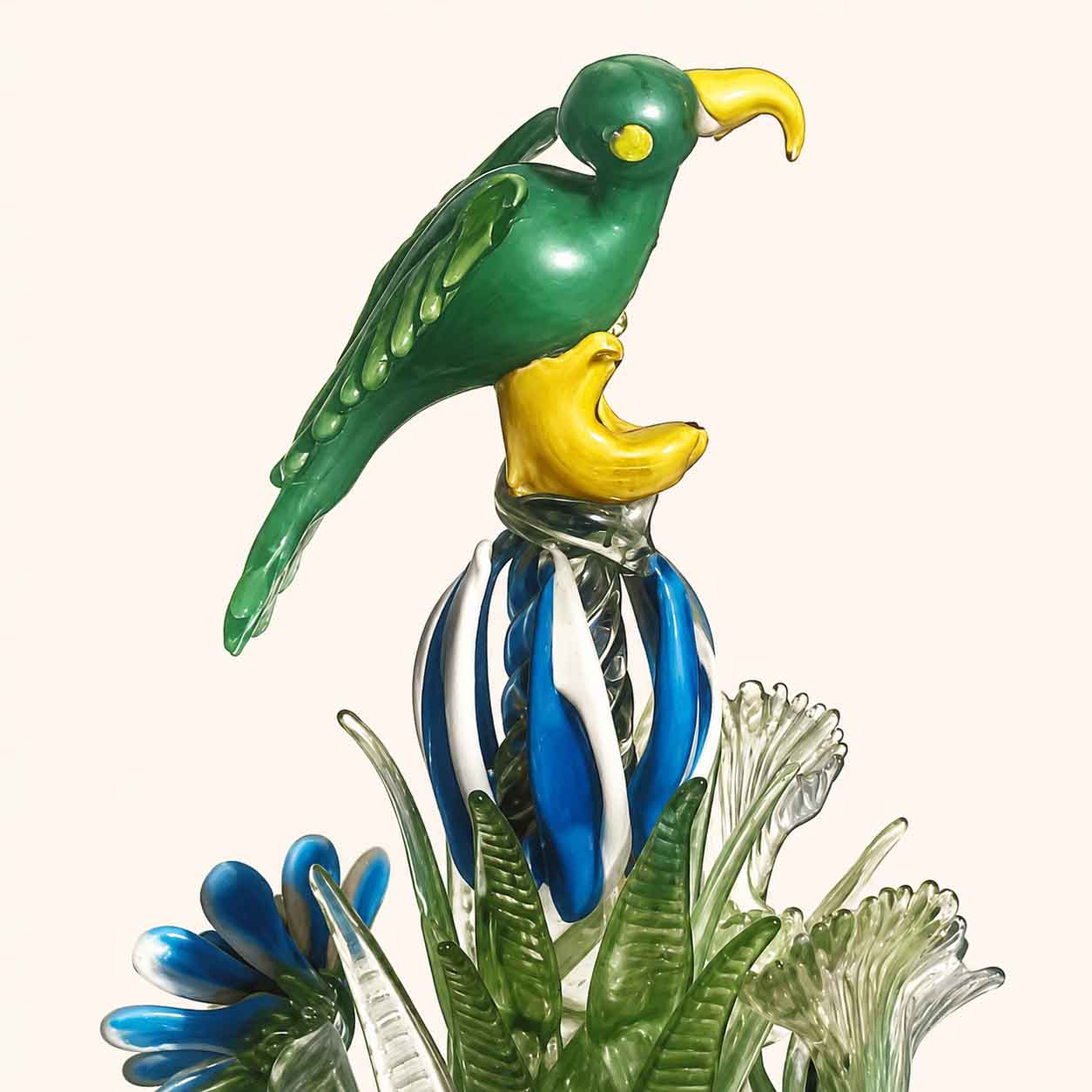
The representation of animals in Murano glass constitutes a distinct artistic field that developed unevenly throughout the history of Venetian glassmaking. Until the twentieth century, zoomorphic forms were generally not conceived as independent artworks, but rather as decorative elements applied to blown glass vessels, ornamental objects, or luxury wares. Only in the late 1920s did animal sculpture in glass emerge as a major artistic genre in Murano, becoming an autonomous language characterized by sculptural research, technical experimentation, and independent artistic value.
The earliest evidence of zoomorphic glass objects dates back to the Venetian Renaissance. Documents from the fifteenth and sixteenth centuries mention small glass animals, including mice, birds, and containers shaped after animals, primarily intended for export or decorative use. In many cases these objects were bottles or vessels whose forms vaguely resembled turtles, geese, or lions, though they did not yet constitute a true sculptural tradition.
At the same time, lampworking techniques developed, allowing artisans to create miniature figures in colored glass, including animals, flowers, beads, and human figures. During the sixteenth century Venetian craftsmen exported these skills abroad, particularly to the court of Archduke Ferdinand II in Innsbruck, where refined objects “à la façon de Venise” were produced under strong Murano influence.

During the Baroque period of the seventeenth and eighteenth centuries, animals reappeared primarily as decorative elements applied to elaborate goblets, covered cups, and ceremonial vessels. Dolphins, serpents, birds, and fantastic creatures were combined with polychrome floral compositions, often intended as diplomatic gifts or aristocratic collectibles. This decorative taste survived into the Neo-Baroque revival of the late nineteenth century, when Murano furnaces revived historical motifs and introduced dragons, winged horses, and fantastic creatures influenced by Art Nouveau and Orientalism.
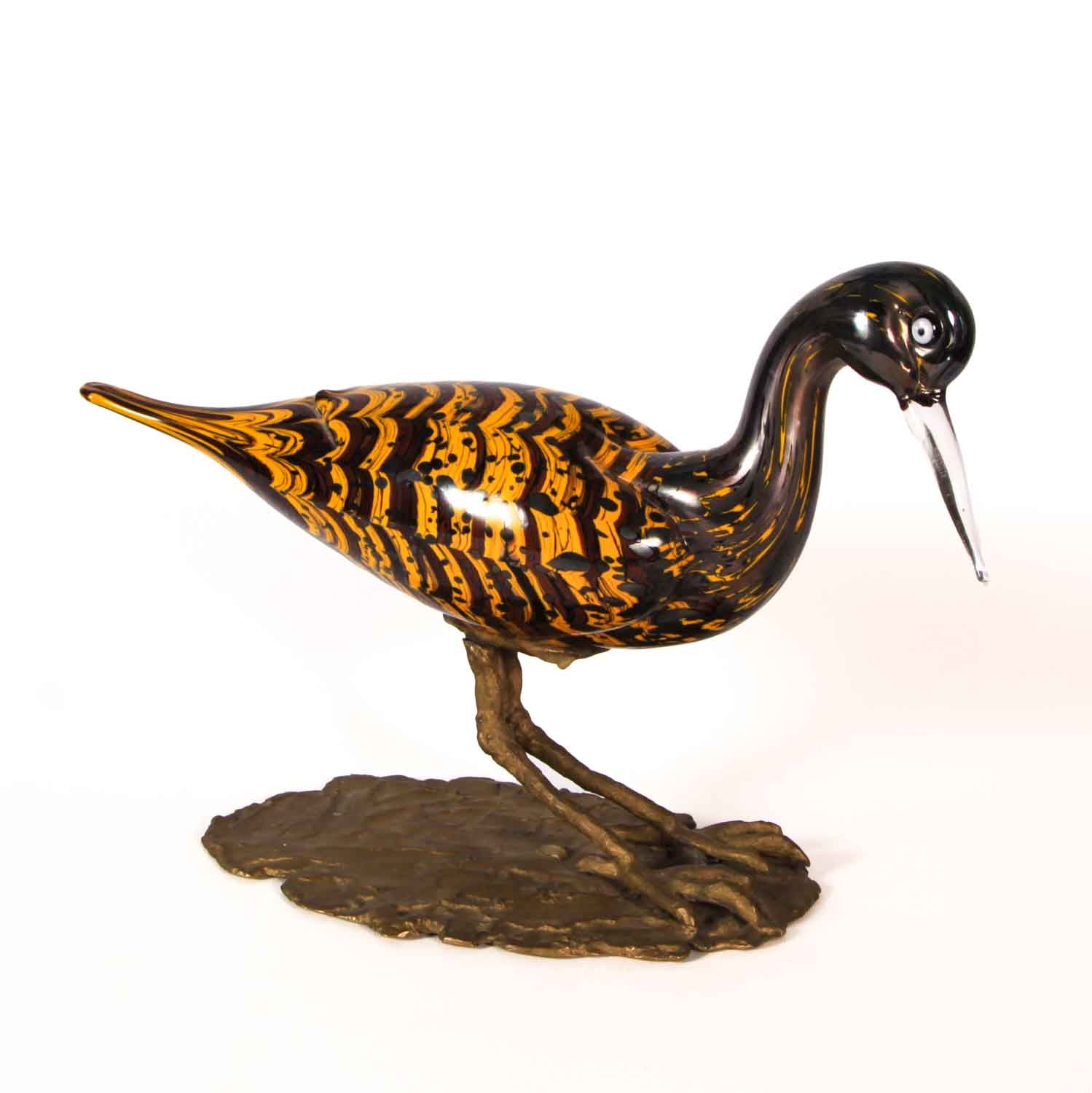
A decisive transformation occurred between 1927 and 1930, within the cultural climate of the Novecento movement and the renewed interest in sculptural plasticity. Artists and glass masters began conceiving animals and human figures as fully independent sculptural works. This innovation required entirely new technical approaches: instead of relying solely on blown glass, craftsmen manipulated large masses of solid molten glass, often creating seamless forms through highly complex processes demanding precise control of weight, heat, and structural balance.
Among the principal figures of this revolution were Ercole Barovier, Napoleone Martinuzzi, Flavio Poli, and Guido Balsamo Stella. Ercole Barovier introduced stylized animals distinguished by strong chromatic effects and decorative experimentation. Napoleone Martinuzzi developed a sculptural language inspired by the Italian Novecento movement, producing animals in pulegoso glass and monumental figures of great formal synthesis. Flavio Poli advanced the use of solid glass and dynamic sculptural forms, while Guido Balsamo Stella translated motifs derived from graphic arts and decorative traditions into glass sculpture.
Throughout the twentieth century, animal sculpture became one of the most representative sectors of Murano production, contributing significantly to both the island’s international prestige and its economy. The evolution of this artistic language demonstrates the remarkable ability of Murano glassmakers to reinterpret tradition continuously, transforming glass from a primarily decorative material into a fully sculptural medium.
Credits: The Glass Ark - Animals in the Perre Rosemberg Collection
Facebook groups:

コメントを書く
全てのコメントは、掲載前にモデレートされます
このサイトはhCaptchaによって保護されており、hCaptchaプライバシーポリシーおよび利用規約が適用されます。